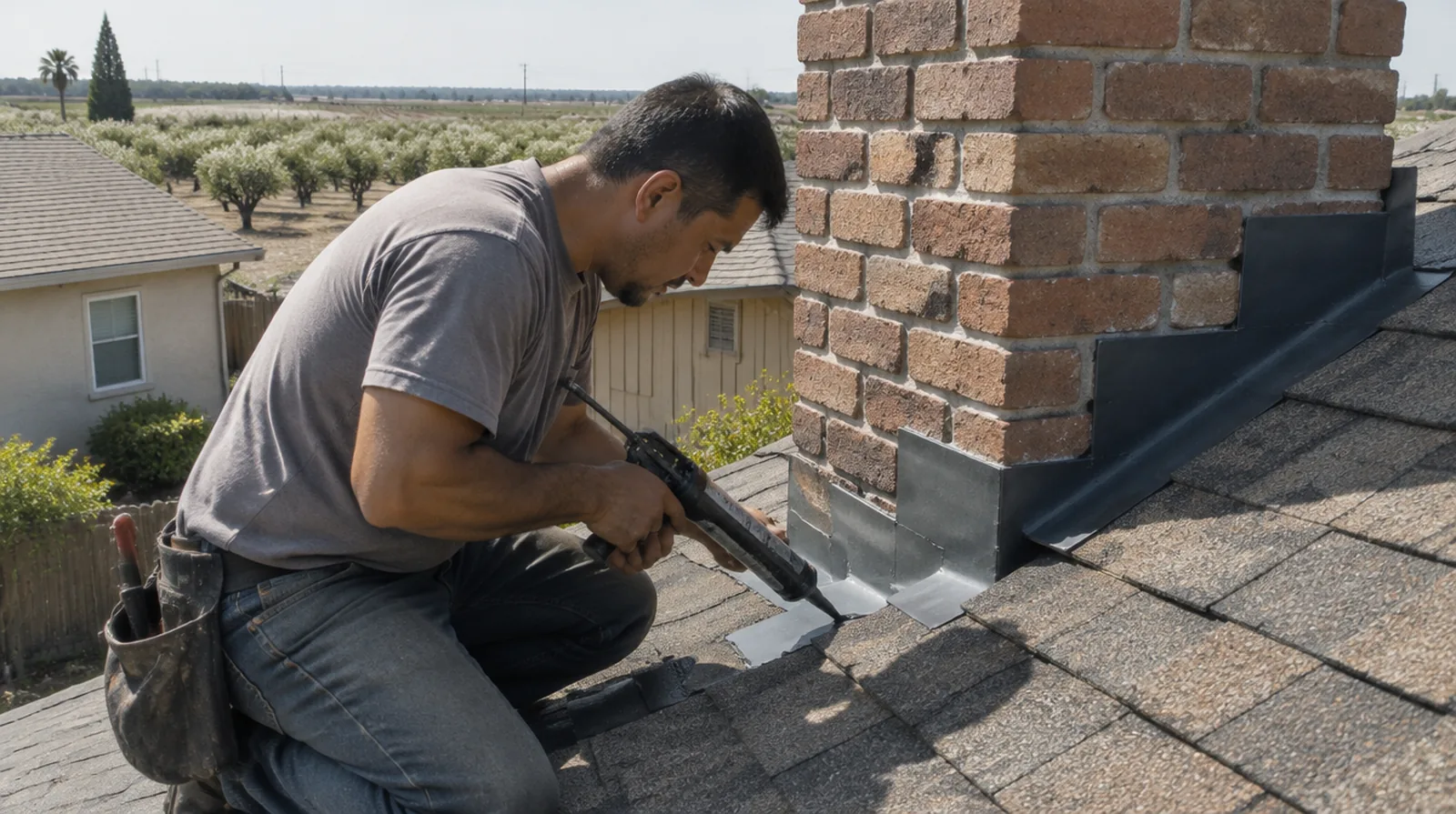
Roof leak repair starts with tracing the water
Water rarely enters right above the stain. It can slip under a lifted shingle or failed flashing, run along the deck or a rafter, and drip down several feet away. On low-slope additions, it can travel under a membrane before showing up inside. That is why patching over the obvious spot often does not work.
We start inside, noting where stains appear and whether they are active. Then we go into the attic and follow water marks uphill toward the source. Finally, we inspect the roof at the likely entry points. When needed, we run a controlled water test on part of the roof to confirm exactly where water gets in.
Where Turlock roofs tend to leak
- Cracked rubber boots around plumbing vent pipes
- Step flashing along stucco walls and dormers
- Chimney flashing and crickets
- Skylight curbs and seals
- Valleys filled with dust and leaves
- Patio cover and addition connections to the house
- Shingles lifted by wind
How we stop the leak
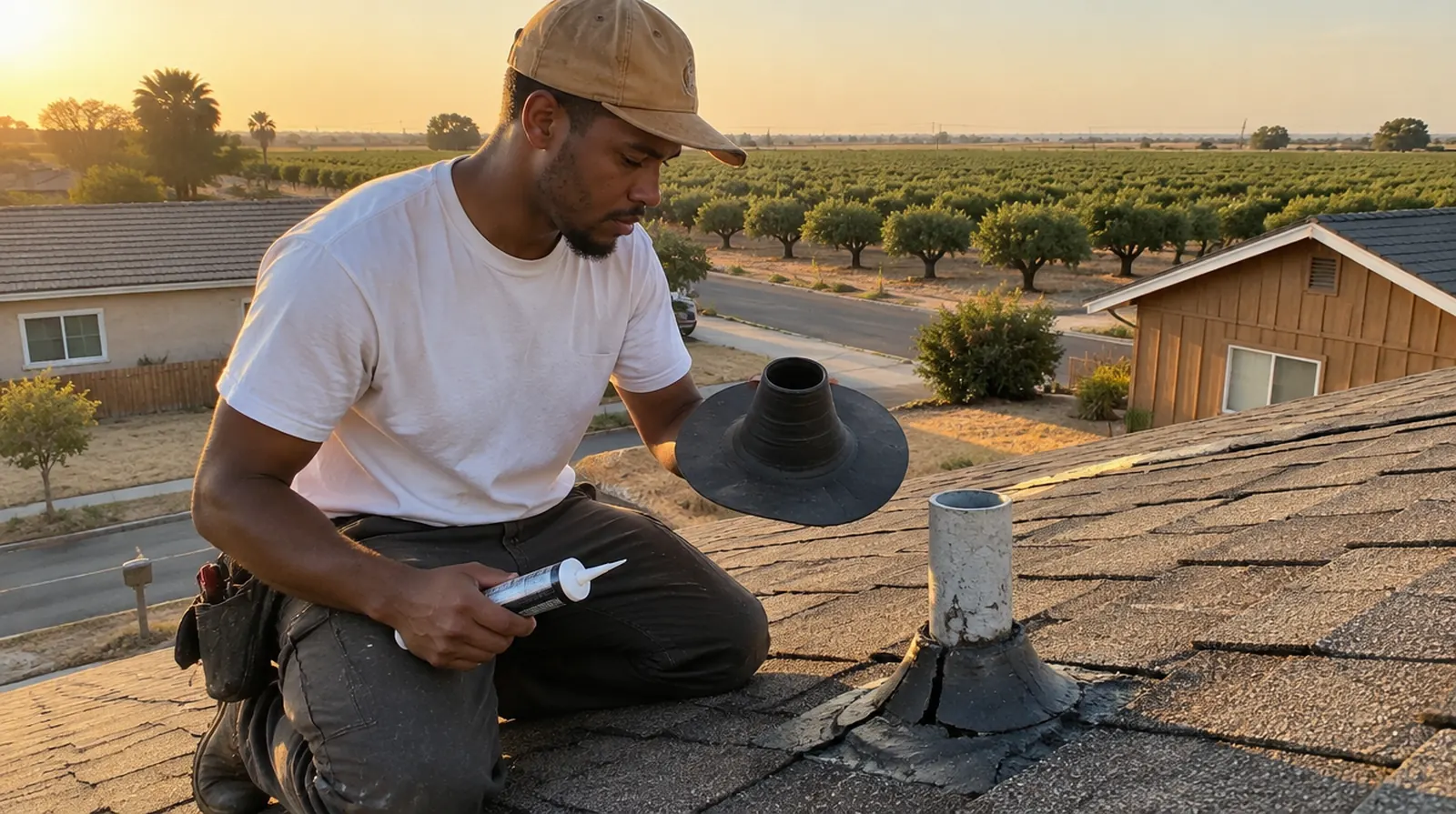
Once we find the entry point, we carefully open the area and check the underlayment and deck. Wet but solid wood dries once the leak stops. Soft or rotted wood gets replaced. We install new underlayment and flashing where needed and reinstall or replace the shingles or tile.
For vent pipes, we replace cracked boots rather than adding more sealant. For walls and dormers, we rebuild flashing so it laps correctly. If the leak is a symptom of wider wear, our roof repair service covers the surrounding work.
Why dry summers hide leaks
During long dry months, sealants crack, boots split and shingles lose their seal without any visible problem inside the house. When the first real storm arrives, water finds all those openings at once. That is why fall and early winter are the busiest times for leak calls. A quick check before the rainy season can catch these issues before they cause interior damage.
What to do while you wait
Place a bucket under the drip and move furniture, rugs and electronics away. If the ceiling is bulging, a small hole at the lowest point can let water drain into a bucket instead of bringing down a larger section. Take photos of the stain and note when the leak appears. Please stay off the roof, especially when it is wet.
Leaks around solar panels
Solar arrays are everywhere in town, and the mounts that hold them are drilled through the roof. If those penetrations were not flashed properly, they can leak, and the panels make them hard to see. We check around mounts carefully and, where needed, coordinate with your solar company if panels have to be lifted for a repair.
Leaks at older chimneys
Brick chimneys on older homes near downtown often have flashing that has been patched with tar many times. Once that tar dries and cracks, water runs straight behind it. Replacing the step and counter flashing, and adding a cricket behind wide chimneys, is the lasting fix.
Our leak tracing tools
Most leaks are found with a flashlight, a moisture meter and patience in the attic. For stubborn cases, a hose test on one roof section at a time, with someone watching inside, pins down the exact spot.
Roof leak repair FAQs
Why does my roof only leak in some storms?
Wind direction and rain intensity matter. Gusty rain can push water under flashing that stays dry in lighter weather.
Can sealant fix the leak?
Sealant may slow it briefly, but it breaks down quickly in valley sun. A lasting fix replaces the failed part.
Do you repair the ceiling?
We repair the roof. Once the area dries, drywall and paint are handled separately.
What if it leaks again?
Call us. Some roofs have more than one entry point, and we will trace it again.
Have an active roof leak?
Call (209) 762-9069 and tell us what you are seeing. We will set a time to trace it.