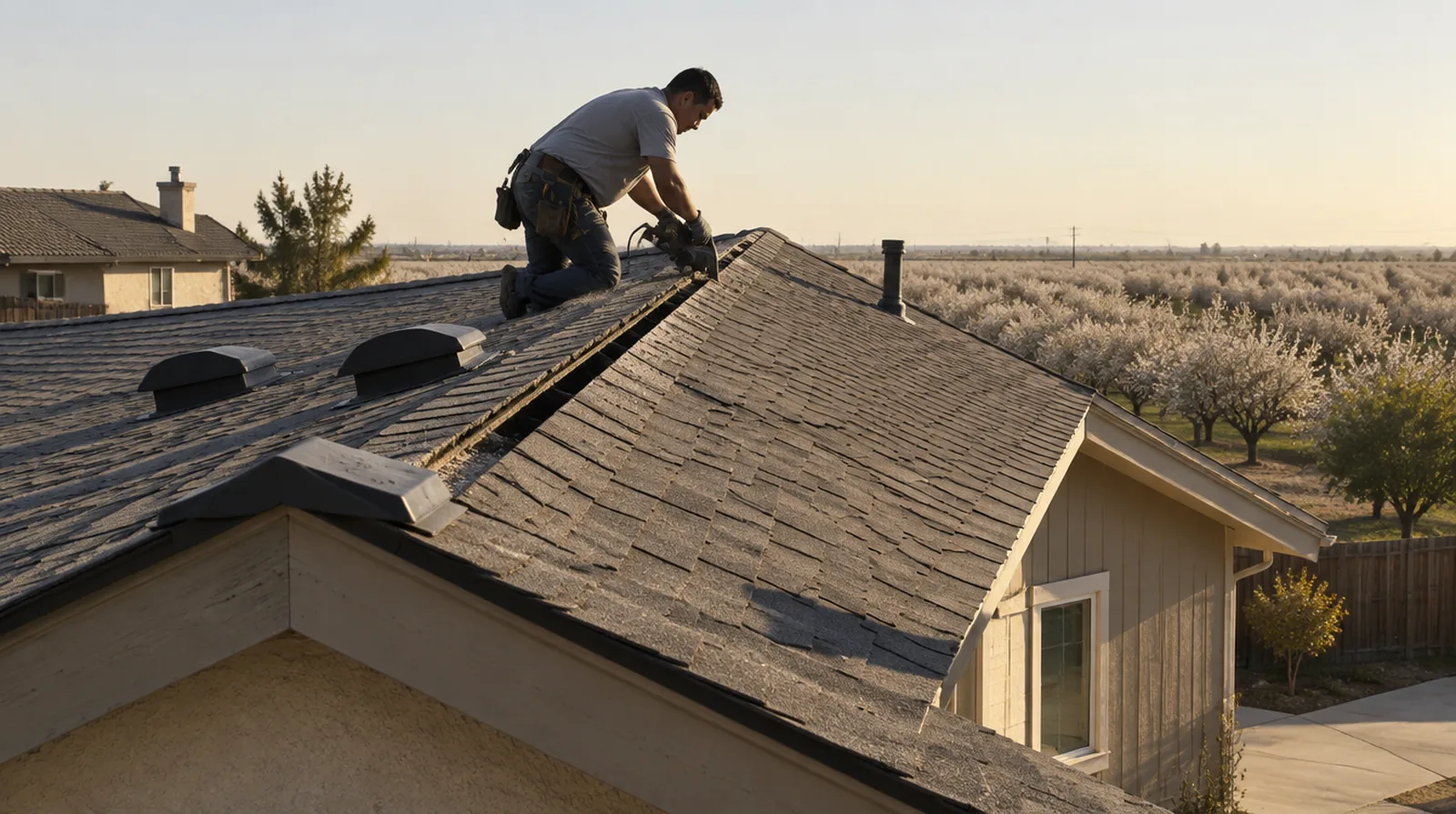
How roof ventilation works
A ventilated attic pulls cooler air in low, through soffit vents under the eaves, and lets hot air out high, through ridge vents or other exhaust. When that flow is balanced, the attic stays closer to outdoor temperature, the deck and shingles are not baked from below, and moisture from winter fog and household activities has a way out.
Many older homes here were built with limited ventilation, often just a few small vents near the ridge or gable ends. Over time, added insulation sometimes blocked soffit vents, making things worse.
Signs you need better ventilation
- Attic heat that feels extreme even in the evening
- Shingles aging faster on sunny slopes
- Moisture stains or frost on the underside of the deck in winter
- Upstairs rooms that stay hot late into the night
- Only a few small vents along a long ridge
How we improve roof ventilation

We start in the attic, checking how much intake and exhaust you have and whether insulation is blocking the eaves. Then we design a system that moves air from soffit to ridge.
A continuous ridge vent is often the cleanest exhaust option on shingle roofs and is easiest to add during asphalt shingle replacement. At the eaves, we open or add soffit vents and install baffles so insulation does not block airflow. On tile roofs, we use vent products designed for the profile. Ventilation helps with heat and moisture, but it will not stop a leak; for that, see our leak repair service.
Balance over more vents
Adding exhaust without enough intake can pull conditioned air from the house through ceiling gaps. Mixing different types of exhaust, such as a ridge vent and a powered fan, can short-circuit airflow so parts of the attic stay hot. We aim for one clear path from eaves to peak.
Winter fog and attic moisture
Ventilation is not only a summer concern. During tule fog season, damp air can condense on the cold underside of the roof deck overnight. Without airflow, that moisture soaks into the wood. Over several winters, it can lead to stained decking, rusted nail tips and mold. Good ventilation helps the attic dry out between foggy spells.
Roof ventilation and solar panels
Solar is common on Turlock homes, and panels limit where vents can go. If you have solar or plan to add it, we design the ventilation layout around the array so airflow still works and panels are not disturbed.
Roof ventilation for two-story and complex rooflines
Newer homes with hips, short ridges and vaulted ceilings do not always have room for a long continuous ridge vent. In those cases, we combine shorter ridge sections with off-ridge vents placed high on the roof, and we make sure every attic space, including small ones over garages or bonus rooms, has its own intake and exhaust path.
Gable vents and ridge vents together
Many older Turlock homes have gable-end vents. When we add a ridge vent, we often recommend closing those gables so air is pulled in from the soffits and out at the ridge, instead of short-circuiting across the top of the attic and leaving the lower deck hot. We explain the reasoning and you decide.
Roof ventilation FAQs
Will better ventilation lower my cooling bill?
A cooler attic means less heat entering rooms below, which can help. Results depend on insulation and ductwork.
Can ventilation be added without a new roof?
Yes. Opening soffits, adding baffles and installing vents can be done on an existing roof.
Should I add a powered attic fan?
Powered fans can cause problems if intake is limited. We usually start with passive ventilation.
Do turbine vents work?
They can, if they are placed well and intake is adequate. We check whether they are doing their job.
Want the attic to breathe?
Call (209) 762-9069 for a roof ventilation look and estimate.